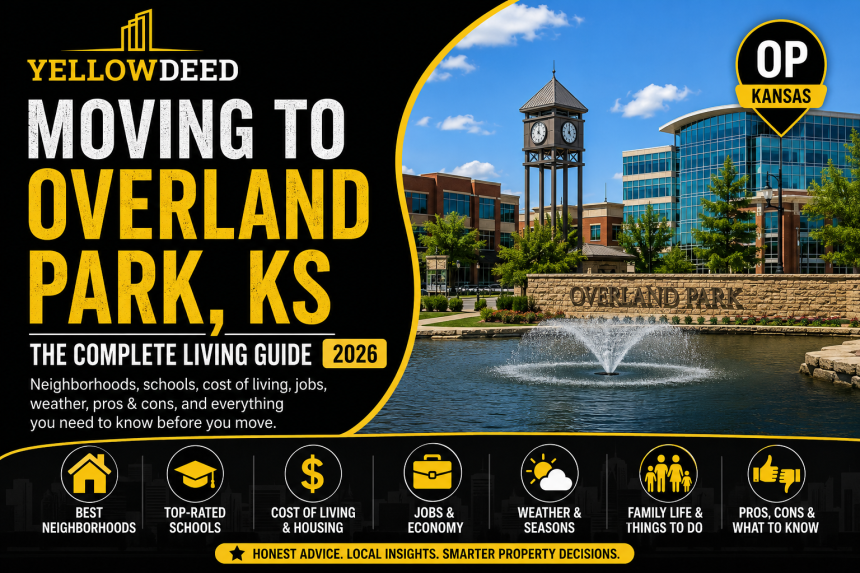
Moving to Overland Park, KS is not hard to understand on the surface.
People move here for the schools, quiet neighborhoods, parks, corporate jobs, safe suburban feel, and access to the Kansas City metro without living directly in Kansas City. It is clean, organized, family-focused, and easier to settle into than many larger cities.
But living in Overland Park is not perfect.
The same things that make the city appealing to some people can make it feel too suburban for others. You will likely need a car. Some neighborhoods can feel cookie-cutter. Johnson County property taxes can surprise newcomers. Summers are humid, winters can be icy, and tornado season is not just a movie reference. If you are moving from a walkable city, a coastal metro, or a place with mild weather, Overland Park may take some adjustment.
That is why this guide is not going to sell you a fantasy version of Overland Park.
We will cover what actually matters before moving to Overland Park: cost of living, housing, neighborhoods, school districts, jobs, traffic, weather, things to do, family life, taxes, and the downsides people do not always talk about.
Why are people moving to Overland Park in 2026?
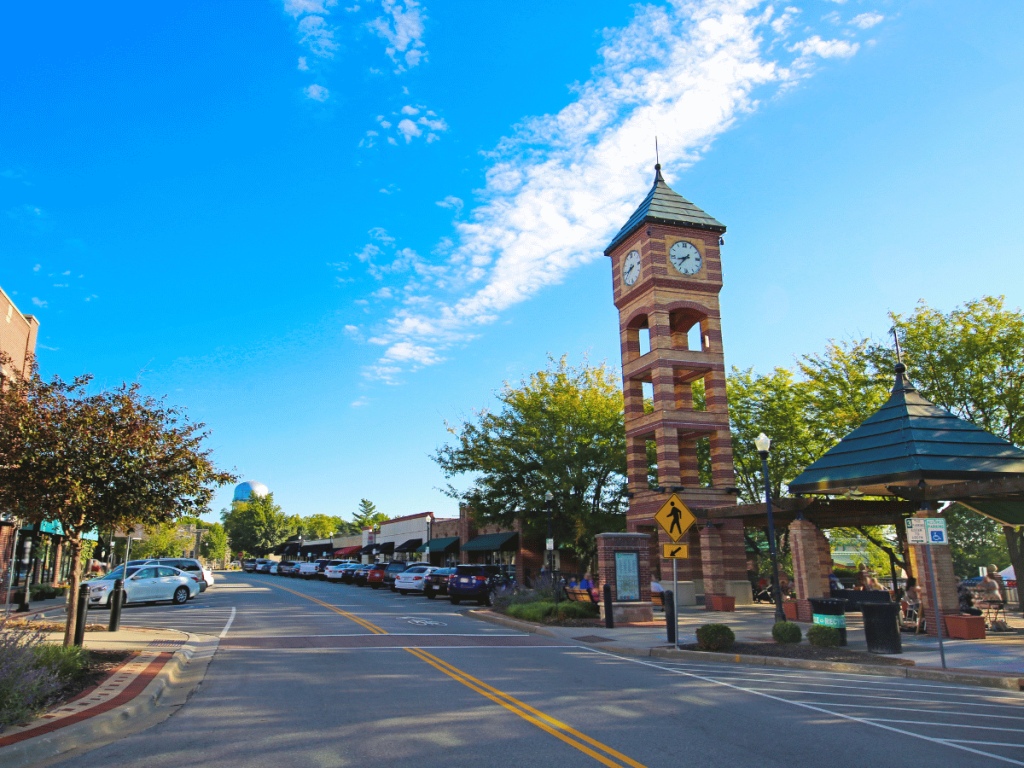
People are moving to Overland Park because it offers a strong suburban lifestyle inside a major metro area.
Overland Park is in Johnson County, Kansas, and functions as one of the largest and most established suburbs in the Kansas City metro. The U.S. Census Bureau estimated Overland Park’s population at 202,893 as of July 1, 2024, making it one of the largest cities in Kansas.
The appeal is practical. Families like the schools. Professionals like the job access. Retirees like the healthcare, shopping, and quieter pace. Remote workers like the space and lower cost compared with coastal cities. Business owners like the stable local economy. Residents enjoy big-city access without giving up suburban convenience.
The city is also close to the Missouri state line, which means you can live in Kansas while still using Kansas City amenities. Downtown Kansas City is usually about 15 to 25 minutes away depending on where you live in Overland Park and the time of day. Kansas City International Airport is generally about 35 to 45 minutes away, depending on your starting point and traffic.
Overland Park fits people who want comfort, predictability, good schools, and a polished suburban environment. It may not fit people who want dense city living, nightlife on every block, or a strong public transportation lifestyle.
Moving to Overland Park: quick pros and cons
If we had to summarize Overland Park quickly, we would say this:
It is one of the best places to live in the USA for families, schools, parks, and suburban quality of life, but it is not the cheapest or most character-filled place in the Kansas City area.
Pros of Overland Park
- Strong public schools
- Family-friendly neighborhoods
- Good parks and green spaces
- Access to Kansas City jobs and amenities
- Stable housing demand and strong quality of life
Cons of Overland Park
- Car-dependent lifestyle
- Higher housing costs than many Kansas cities
- Johnson County property tax reality
- Suburban sprawl and cookie-cutter areas
- Humid summers, icy winters, and tornado season
Where should you start your Overland Park search?
Pick your main lifestyle priority. Overland Park changes a lot from the historic north side to newer South OP neighborhoods.
Can your budget handle Overland Park?
Use this quick estimate to see how housing, property taxes, car costs, and monthly lifestyle expenses may feel before relocating.
Overland Park at a glance
Overland Park is not a small town. It is a large, mature suburb with office parks, shopping centers, schools, trails, sports facilities, medical access, and established neighborhoods.
It sits in Johnson County, one of the most affluent and job-rich counties in Kansas. The city is part of the broader Kansas City metro, so residents get access to Kansas City employers, sports, restaurants, hospitals, museums, and airport connections while living in a quieter suburban setting.
Here is the quick snapshot:
| Category | What to know |
|---|---|
| City | Overland Park, KS |
| County | Johnson County |
| Metro | Kansas City metro |
| Population | About 203,000 |
| Lifestyle | Suburban, family-focused, car-dependent |
| Best known for | Schools, parks, Corporate Woods, Deanna Rose, shopping, safe neighborhoods |
| Main school districts | Blue Valley, Shawnee Mission, Olathe in some areas |
| Best fit | Families, professionals, remote workers, retirees, suburban buyers |
| Biggest downside | Higher housing costs, taxes, sprawl, weather swings |
Overland Park is often described as a top place to live because it checks the practical boxes. But the city is best understood as a lifestyle fit. If you want quiet, clean, organized suburban living, it can be excellent. If you want grit, density, old-city character, and minimal driving, it may feel too controlled.
Cost of living in Overland Park
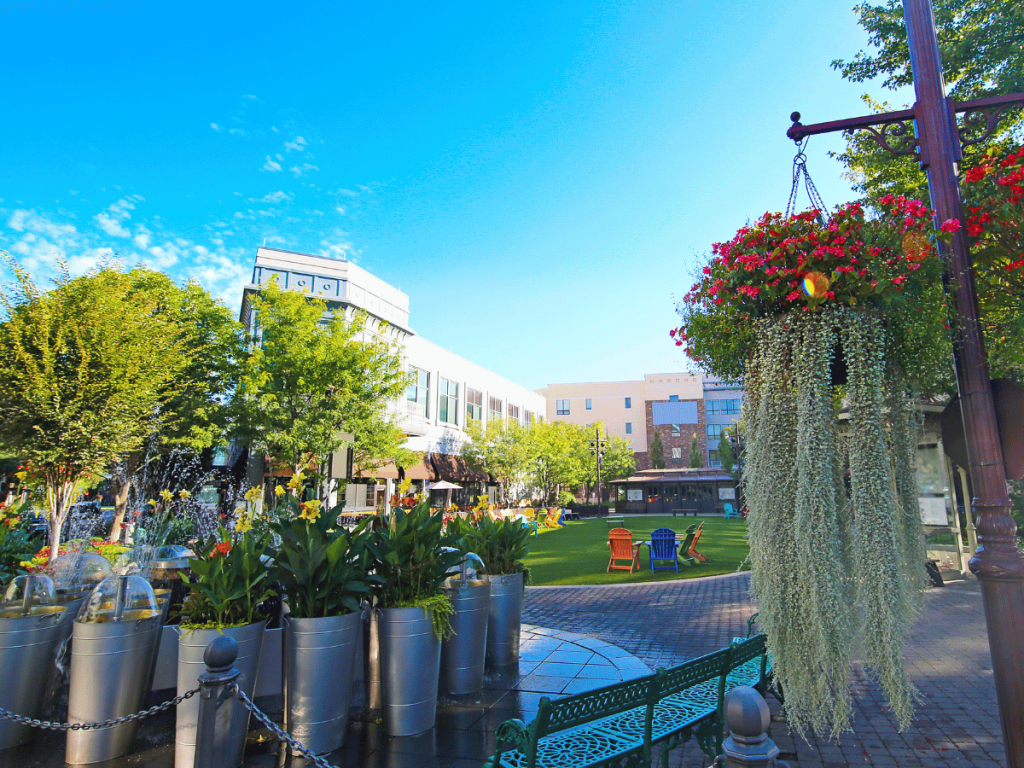
The cost of living in Overland Park is usually more affordable than coastal metros, but it is not necessarily cheap.
Compared with New York, Los Angeles, San Diego, Seattle, Boston, or Washington, D.C., Overland Park can feel much more manageable. Compared with Kansas City proper, smaller Kansas cities, or older Missouri suburbs, Overland Park can feel expensive.
The biggest cost drivers are housing, property taxes, and lifestyle expectations.
Redfin reported Overland Park’s median sale price around $495K for the three months ending May 2026, while Zillow’s recent rental market data listed average rent around $2,195 overall, with one-bedroom apartments around $1,312 and two-bedrooms around $1,635.
That means a household moving to Overland Park should not budget like it is moving to a low-cost small town. You may save compared with the coasts, but the best school zones, newer homes, and South Overland Park neighborhoods can command real money.
Kansas also has state income tax. Recent 2026 state tax summaries list Kansas individual income tax rates at 5.2% and 5.58%, depending on income and filing status. Overland Park also has a 9.35% sales tax rate, according to the city’s own sales and property tax page.
The property tax piece deserves attention. Overland Park lists its city property tax rate at 14.540 mills, but your total property tax bill also depends on Johnson County, the school district, and any other local taxing jurisdictions. Johnson County explains that residential property is assessed at 11.5% of appraised value, and taxes are calculated by multiplying assessed value by the mill levy.
Budget beyond the mortgage or rent.
Around $450K to $520K citywide, higher in premium school zones.
Often around $1,150 to $1,400 depending on location and property type.
Overland Park lists a 9.35% local sales tax rate.
Plan for gas, insurance, maintenance, and daily driving.
Overland Park housing and real estate market
Overland Park housing is not one market.
Older homes in northern Overland Park can feel very different from new builds south of 135th Street. A buyer looking near Downtown Overland Park may find smaller lots, mature trees, older homes, and more character. A buyer looking in South Overland Park may find larger homes, newer subdivisions, bigger garages, and higher prices.
The housing market generally stays competitive because of schools, jobs, parks, and the overall reputation of Johnson County. Redfin’s May 2026 data showed homes selling quickly, with an average of 9 days on market.
That does not mean every listing sells instantly. Price range, condition, school district, age, and location matter. A renovated home in a Blue Valley zone may move quickly. A dated home with a high asking price may sit longer.
Renters will find apartment communities around Corporate Woods, College Boulevard, Metcalf Avenue, Downtown Overland Park, and South Overland Park. The rental market can be easier than buying, but newer apartments with amenities are not always cheap.
If you are moving to Overland Park and planning to buy, look closely at:
- School district boundaries
- Property tax estimates
- HOA rules
- Commute time
- Basement or storm shelter access
- Roof age, because hail can be a real issue
- Highway access
- Walkability, if that matters to you
- Distance to shopping, daycare, and medical care
Best neighborhoods in Overland Park
The best neighborhoods in Overland Park depend on your budget, school needs, commute, and lifestyle.
Downtown Overland Park
Downtown Overland Park is one of the most character-filled parts of the city. It has the Farmers’ Market, local restaurants, shops, older homes, and a more walkable feel than many parts of Overland Park. It is a strong fit for people who want charm, smaller homes, and access to local events.
Old Overland Park
Old Overland Park around the 79th and Metcalf area gives you the historic core of the city. Expect mature trees, older homes, smaller lots, and easier access to Kansas City and Prairie Village. It is not as polished as newer southern neighborhoods, but that is part of the appeal for some buyers.
Blue Valley area
The Blue Valley area is one of the most searched relocation zones because of Blue Valley School District. It is popular with families, but homes can be more expensive. If schools are your main reason for moving to Overland Park, this area will likely be on your list.
Deer Creek
Deer Creek is an upscale golf-course community with larger homes and a more premium suburban feel. It is a good fit for buyers who want a higher-end neighborhood, golf access, and a quieter residential setting.
Nottingham South and Nottingham By The Green
These areas are family-friendly and often appeal to buyers who want good neighborhood structure without jumping all the way into the highest price tier. You will see established homes, community feel, and good access to schools and shopping.
Corporate Woods area
The Corporate Woods area is practical for professionals who want to live near office parks, apartments, condos, and major roads. Corporate Woods itself has about 2.1 million square feet of office space across 29 buildings, making it one of the major employment hubs in Overland Park.
South Overland Park
South Overland Park, especially around 135th Street and farther south, has newer builds, larger homes, bigger lots, and a more modern suburban feel. This is where many relocating families look when they want newer construction and school-focused neighborhoods.
Leawood-adjacent areas
Some buyers compare Overland Park with nearby Leawood, Prairie Village, Mission, and Lenexa. Leawood is technically a separate city, but people often search these areas together because they share schools, shopping patterns, commute routes, and Johnson County lifestyle.
Schools in Overland Park
Schools are one of the biggest reasons families move to Overland Park.
The city is served mainly by Blue Valley School District and Shawnee Mission School District, with some areas connected to Olathe School District depending on the exact address. This is why you should never assume a home is in a specific school district based only on the city name.
Blue Valley School District is headquartered in Overland Park and is one of the most recognized public school districts in Kansas. The district describes its mission around academic excellence and a supportive learning environment. Shawnee Mission School District also serves parts of northern Overland Park and nearby areas, with district offices in Shawnee Mission.
For higher education, Johnson County Community College is a major local option. MidAmerica Nazarene University is nearby in Olathe, and the University of Kansas in Lawrence is about 45 minutes west depending on traffic.
If schools are central to your relocation, do three things before choosing a home:
- Verify the assigned elementary, middle, and high school.
- Compare district boundaries on official school district tools.
- Visit the neighborhood during school drop-off or pickup hours.
School district reputation can influence home prices, resale demand, and neighborhood feel in Overland Park.
The job market in Overland Park
Overland Park has a strong job market because it sits inside the broader Kansas City metro while also hosting major local employers.
Corporate Woods is one of the most important business areas in the city. It is home to a large concentration of office space and companies, with convenient access to I-35, US-69, and major suburban neighborhoods.
Major employers and job anchors in or near Overland Park include:
- Black & Veatch, headquartered in Overland Park
- T-Mobile’s former Sprint campus in the area
- Garmin International nearby in Olathe
- CommunityAmerica Credit Union
- Waddell & Reed and related financial services presence
- Corporate Woods office tenants
- Healthcare systems across Johnson County and Kansas City
- Kansas City metro employers such as Oracle Health, H&R Block, Hallmark, and the Federal Reserve Bank of Kansas City
The job mix includes engineering, telecom, healthcare, finance, insurance, education, logistics, construction, professional services, and corporate operations.
Remote workers also like Overland Park because they can get more space than in many coastal cities. But remote workers should still think carefully about location. If you are home all day, neighborhood feel, trail access, coffee shops, and home office space matter more.
Weather and climate: four seasons, humidity, snow, and tornadoes
Overland Park has four true seasons.
Spring can be beautiful, but it can also be stormy. Summer is hot and humid. Fall is often one of the best times of year. Winter can bring snow, ice, and cold mornings.
The weather is not extreme every day, but newcomers should take it seriously. Kansas has a real severe-weather profile. NOAA’s Kansas disaster summary says the state had 102 confirmed billion-dollar weather and climate disaster events from 1980 to 2024, with severe storms making up the largest share.
Tornado season is a real consideration. The National Weather Service says Kansas averages 95 tornadoes per year and that peak tornado season runs from April through June. Another NWS tornado climatology page says April through June historically accounts for about 74% of Kansas tornadoes.
That does not mean you should be afraid of moving to Overland Park. It means you should understand how locals live with weather. Many homes have basements. People watch storm alerts. Schools and workplaces have severe-weather procedures. Hail, high winds, and ice storms also matter for insurance and maintenance.
If you are buying a home, ask about:
- Basement or storm shelter access
- Roof age
- Previous hail damage
- Drainage
- Tree maintenance
- Insurance history
- HVAC age for humid summers
Things to do in Overland Park
Overland Park has more to do than people expect, especially for families.
Deanna Rose Children’s Farmstead is one of the signature family destinations. It includes nearly 250 animals and birds of prey, gardens, a one-room schoolhouse, and a 12-acre educational farm environment tied to Kansas heritage.
The Overland Park Arboretum & Botanical Gardens is another major local anchor. The city describes it as a 300-acre educational, recreational, and cultural resource for the Kansas City region.
Other places to know include:
- Indian Creek Trail and Greenway
- Overland Park Farmers’ Market
- Prairiefire and Museum at Prairiefire
- Oak Park Mall
- Town Center Plaza
- Overland Park Convention Center
- Overland Park Sports Complex and youth sports facilities
- Local restaurants around Downtown Overland Park, Prairiefire, and south OP
- Nearby Kansas City attractions, including Chiefs, Royals, Sporting KC, museums, barbecue, and live events
Visit Overland Park describes the city as a family-friendly destination near Kansas City with restaurants, premier shopping, scenic parks, award-winning attractions, and youth sports venues.
That is a fair summary. Overland Park is not a nightlife-heavy city, but it is strong for family activities, shopping, trails, youth sports, dining, and easy access to broader Kansas City amenities.
Getting around Overland Park
You need a car in Overland Park.
This is one of the most important things to know before moving to Overland Park. Public transportation exists in the Kansas City region, but it is limited compared with major dense cities. Most residents drive to work, school, grocery stores, daycare, parks, and restaurants.
Major roads include I-35, I-435, US-69, Metcalf Avenue, College Boulevard, 95th Street, 119th Street, and 135th Street. K-10 is useful if you are driving toward Lawrence or parts of the west metro.
The upside is convenience. Overland Park is built for drivers. Parking is usually easier than in dense cities. Shopping centers are accessible. Suburban errands are straightforward.
The downside is sprawl. A place may be “in Overland Park” but still 25 minutes from another part of Overland Park. Your commute depends heavily on where you live and where you work.
If you are moving from Chicago, New York, Boston, San Francisco, or Washington, D.C., Overland Park will feel much more car-dependent.
Family life and community feel
Overland Park is one of those cities where family life drives the local identity.
You see it in the school discussions, youth sports, parks, weekend events, cul-de-sacs, soccer fields, and neighborhood routines. Families with children often choose Overland Park because they want a stable community, strong public schools, and a quieter environment without being far from Kansas City.
The city also works for people who want order. Roads are maintained, commercial areas are polished, neighborhoods are organized, and amenities are convenient.
For some people, that feels comfortable. For others, it feels too suburban.
A strong sense of community exists, but it often comes through schools, churches, sports leagues, neighborhood associations, parent groups, and local routines rather than dense street life.
Downsides nobody talks about
This is the section people actually need before relocating.
Overland Park can feel cookie-cutter
Some people love the clean suburban feel. Others feel like parts of the city lack character compared with older Midwest cities. South Overland Park in particular can feel more subdivision-heavy, with similar homes, large roads, and commercial corridors.
You drive almost everywhere
Even if you live near a trail or shopping center, Overland Park is still car-centered. Public transportation is limited, and walkability depends heavily on the neighborhood.
Property taxes can surprise newcomers
People moving from lower-tax areas may be surprised by Johnson County property tax bills. Property taxes are not only the city mill rate. School district and county levies matter too.
Weather is a real factor
Humid summers, icy winters, hail, severe storms, and tornado warnings are part of life. Most residents adjust, but out-of-state movers should not ignore it.
It can feel expensive for Kansas
Overland Park is not cheap compared with many Kansas cities. Strong schools and suburban demand push housing costs up, especially in high-demand areas.
It may not be ideal for singles who want nightlife
You can find restaurants, gyms, coffee shops, and community events, but if your priority is nightlife, walkability, and dense urban energy, you may prefer Kansas City neighborhoods on the Missouri side or closer-in areas like Prairie Village, Mission, or downtown Kansas City.
How to plan your move to Overland Park
A smart move to Overland Park starts with matching your daily life to the right part of the city.
If schools matter most, start with school district boundaries. If commute matters most, start with work location and highway access. If character matters most, look at Downtown Overland Park and older northern areas. If you want newer homes, look south. If you want luxury suburban living, compare Deer Creek, Blue Valley areas, and Leawood-adjacent neighborhoods.
Use this quick checklist.
Before moving to Overland Park, check these first.
Confirm Blue Valley, Shawnee Mission, or Olathe before buying.
Estimate the full Johnson County tax bill, not just the mortgage.
Test I-35, I-435, US-69, and Metcalf at real drive times.
Ask about basement access, roof age, and hail history.
Visit both north and south Overland Park before choosing.
Plan for daily driving, insurance, fuel, and maintenance.
Is Overland Park a good place to live?
Yes, Overland Park is a good place to live if you want schools, safety, parks, job access, and suburban comfort.
It is especially strong for families, professionals, and people who want Kansas City metro access without living in a denser urban environment. It has good amenities, strong public schools, a stable housing market, and plenty of family-focused activities.
But it is not the right place for everyone.
If you want walkability, old-city charm, public transit, lower taxes, cheap housing, or mild weather, Overland Park may not match your expectations. The city is best for people who want a clean, reliable, well-run suburb and are comfortable with the tradeoffs.
FAQs about moving to Overland Park, KS
Is Overland Park a good place to live in 2026?
Yes. Overland Park is a good place to live for people who want strong schools, suburban neighborhoods, parks, job access, and Kansas City metro amenities. It is less ideal for people who want dense urban living or public transportation.
What is the cost of living like in Overland Park compared to the national average?
Overland Park is more affordable than many coastal metros but can be higher than the Kansas average. Redfin’s cost calculator places Overland Park about 3% above the national average, while other cost-of-living tools may vary based on methodology.
What are the best neighborhoods in Overland Park?
Popular areas include Downtown Overland Park, Old Overland Park, Blue Valley areas, Deer Creek, Nottingham South, Nottingham By The Green, Corporate Woods area, and South Overland Park.
What school district is best in Overland Park?
Blue Valley School District is one of the most searched and highly regarded districts in the city. Shawnee Mission School District also serves parts of Overland Park and nearby areas. Always verify the exact school assignment before buying or renting.
How safe is Overland Park?
Overland Park is generally considered a safe suburban city, but safety still varies by area, property type, and daily routine. Check local crime maps and visit neighborhoods at different times before choosing a home.
What is the weather like in Overland Park year-round?
Overland Park has four seasons, with humid summers, cold winters, spring storms, and fall weather that many residents enjoy. Severe storms, hail, ice, and tornado warnings are part of the local climate reality.
Do tornadoes really hit Overland Park?
Tornadoes are a real risk in Kansas, although direct hits are not everyday events. The National Weather Service says Kansas peak tornado season runs from April through June.
What are the biggest employers in Overland Park?
Major local and regional employers include Black & Veatch, T-Mobile’s former Sprint campus, Corporate Woods tenants, CommunityAmerica Credit Union, nearby Garmin International, healthcare systems, and broader Kansas City metro employers.
How much are property taxes in Overland Park?
Your property tax bill depends on your appraised value, assessment rate, school district, county, city, and other levies. Overland Park lists a city property tax rate of 14.540 mills, but the full bill includes more than the city rate.
Do I need a car in Overland Park?
Yes, most people need a car in Overland Park. The city is suburban and spread out, and public transportation is limited compared with major urban markets.
Is Overland Park expensive compared to Kansas City proper?
Generally, yes. Overland Park is often more expensive than Kansas City proper because of schools, Johnson County demand, suburban amenities, and housing quality. Specific costs depend on neighborhood and property type.
What is there to do in Overland Park for families?
Families can visit Deanna Rose Children’s Farmstead, Overland Park Arboretum & Botanical Gardens, Indian Creek Trail, Farmers’ Market, Prairiefire, Oak Park Mall, Town Center Plaza, sports facilities, and nearby Kansas City attractions.
Final thoughts
Moving to Overland Park, KS can be a smart decision if you want a strong suburban lifestyle in the Kansas City metro.
The city offers good schools, family-friendly neighborhoods, parks, job access, shopping, healthcare, and a stable quality of life. It is clean, convenient, and well-suited for families and professionals who want room to breathe.
But the honest version matters.
Overland Park is car-dependent. Some areas feel cookie-cutter. Housing can be expensive by Kansas standards. Property taxes need to be calculated carefully. Weather is real, especially spring storms, humid summers, and winter ice.
The best way to decide is to visit the city with your actual life in mind. Drive the commute. Walk Downtown Overland Park. Tour neighborhoods north and south of I-435. Check school boundaries. Estimate taxes. Ask local residents what they like and what frustrates them.
Overland Park can be one of the best places to live in Kansas, but only if the lifestyle fits what you want every day.